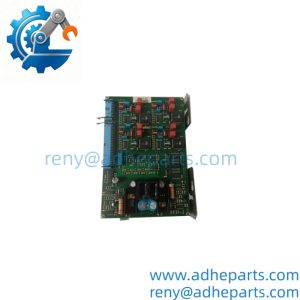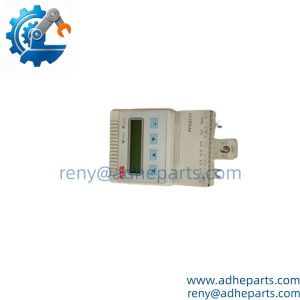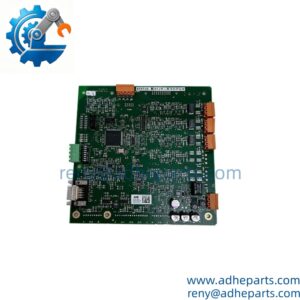
Description
Note: Many products are not yet listed. Please contact us for more product information. Our supply channels are constantly expanding, and we currently have 20 stable shared supply channels. Please confirm the model, product, price, and all other necessary information with customer service before placing an order. We offer new, refurbished, and used products, and prices are adjusted according to the year of the item you require.
3. Key Technical Specifications
Confirm each line against the OEM datasheet and the label on your existing module before ordering. The PXI-4071 was built in several variants, and the option code on the label determines the exact configuration.
| Parameter | Value |
|---|---|
| Model | PXI-4071 |
| Brand | National Instruments |
| Product Family | PXI FlexDMM |
| Module Type | Digital multimeter with isolated digitizer |
| Resolution | 7½ digits (DMM mode) — verify on your build |
| Digitizer Sample Rate | Up to 1.8 MS/s — verify with OEM datasheet |
| ADC Resolution | 26 bits (DMM mode) — verify |
| DC Voltage Range | 10 nV to 1000V — verify full range and accuracy |
| AC Voltage Range | Verify with OEM datasheet |
| DC Current Range | Verify with OEM datasheet |
| AC Current Range | Verify with OEM datasheet |
| Resistance Range | Up to 5 GΩ — verify |
| Additional Measurements | Diode test, continuity, capacitance, temperature (RTD/thermistor) — verify firmware support |
| Isolation | Channel-to-chassis isolation — verify voltage rating |
| PXI Bus Interface | PXI hybrid slot compatible — verify chassis compatibility |
| Triggering | PXI trigger bus, star trigger, and external trigger — verify |
| Calibration | External calibration required — verify calibration interval and certificate status |
| Operating Temperature | 0 °C to +55 °C (typical — verify) |
| Storage Temperature | –40 °C to +85 °C (typical — verify) |
| Humidity | 5% – 95% RH, non-condensing |
| Weight | Verify with OEM datasheet |
| Certifications | CE, UL, CSA — verify on the specific unit’s label |
4. Product Introduction
The National Instruments PXI-4071 is a 7½-digit digital multimeter module for the PXI platform. It measures DC and AC voltage, current, resistance, and other parameters with high precision, and it includes a 1.8 MS/s isolated digitizer mode that lets the same module capture waveforms rather than just steady-state values. It is the module that handles precision measurement in a PXI-based test system.
The engineering value is the combination of DMM accuracy and digitizer speed in one slot. A traditional 7½-digit DMM is a bench instrument — accurate but slow. The PXI-4071 puts that accuracy on a PXI card and adds a digitizer mode that can capture transients and waveform shapes at 1.8 MS/s. In my experience, that flexibility is what makes the module useful in automated test systems where the same channel must measure a steady voltage and then capture a transient without a cable change.
Two things decide whether a swap works. First, the chassis compatibility. The PXI-4071 requires a PXI hybrid slot, and not every PXI chassis provides one. Second, the calibration status. A precision DMM is only as good as its last calibration, and a surplus module without a current calibration certificate may not meet your accuracy requirements. Ask for the calibration date and the certificate before you order.
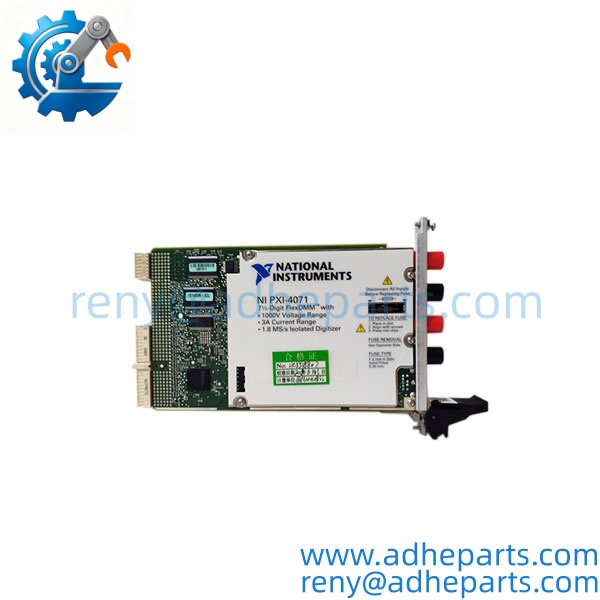
PXI-4071
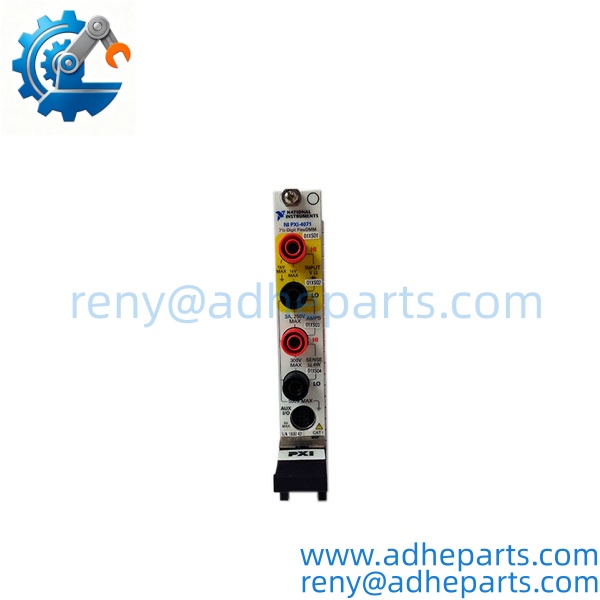
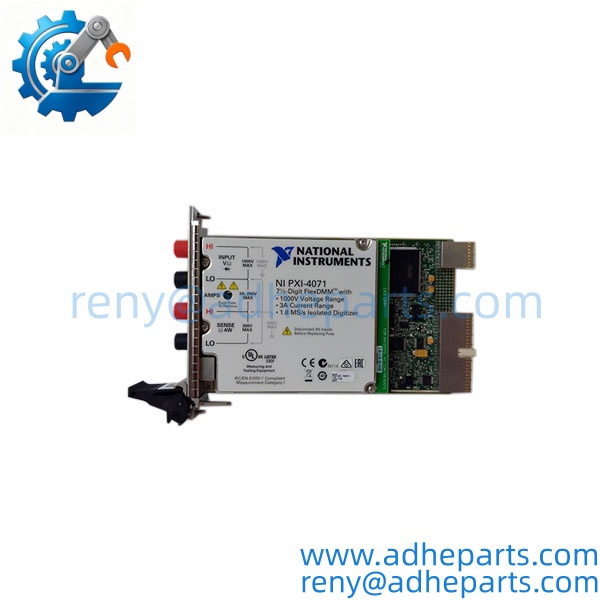
PXI-4071
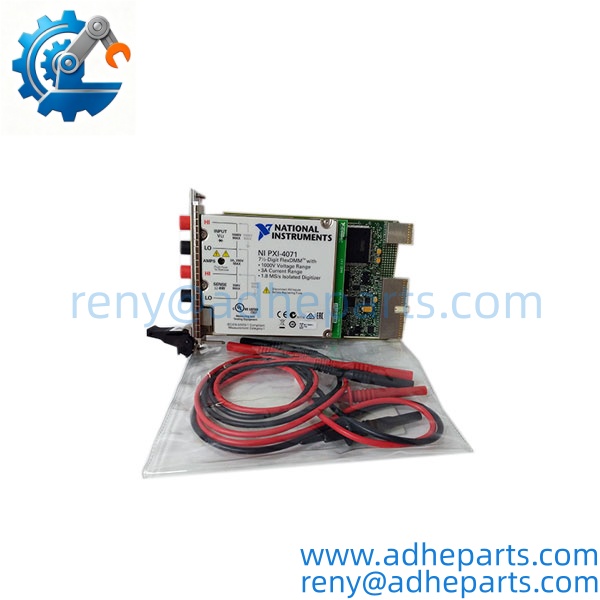
PXI-4071
5. Application Scenarios & Field Experience
Part 1 – Narrative Paragraph
The failure that hurts most on a precision DMM module is not a dead channel — it is a channel that reads within tolerance on a bench check but drifts under temperature. The module passes the self-test, the readings look reasonable, and the test system reports a pass. What nobody sees is that the readings have drifted outside the specification because the module has not been calibrated in three years. I have seen a production test line pass defective boards because the DMM was reading 0.3% low. The module was fine mechanically. The calibration was stale. When you buy a surplus PXI-4071, ask for the calibration certificate and the date. A precision instrument without a current certificate is a guess, not a measurement.
Part 2 – Numbered List (Application Scenarios)
- Semiconductor – Wafer-Level Parametric Test – The module measures leakage current, threshold voltage, and resistance on wafer-level test structures. The 7½-digit resolution resolves the small currents and voltages that parametric tests require.
- Automotive – ECU Production Test – Used in end-of-line test stands to verify sensor outputs, actuator resistances, and supply voltages. The digitizer mode captures transient behavior during power-up and load switching.
- Aerospace – Avionics Bench Test – The module measures resistance and voltage on avionics harnesses and connectors. The high resistance range detects insulation faults and open pins.
- Calibration Laboratories – Reference Measurement – Used as a transfer standard in calibration labs where a PXI-based system replaces a bench DMM. The 7½-digit resolution and the digitizer mode cover both steady-state and dynamic measurements.
Part 3 – Short Field Story
A contract manufacturer had a PXI-based test stand that was passing boards that later failed in the field. The test engineer suspected the DMM module and sent it to us for evaluation. We ran a calibration check and found the module was reading 0.25% low on the 10V DC range — outside the specification for the 7½-digit class. The module had not been calibrated in four years. We supplied a replacement with a current calibration certificate, the test stand was recalibrated, and the field failures stopped. The original module had been working — it was just out of calibration.
6. Standard Operating Procedure (SOP) for Quality Control
- Visual & Origin Inspection – We verify the NI marking, the model string, and the date code. We inspect the PXI connector for bent pins and the front panel for damage. A module with a damaged connector or evidence of moisture ingress is rejected.
- Revision and Firmware Documentation – We read and photograph the full model string, the firmware revision, and the calibration date. That record ships with the module so you can compare it against the unit you are replacing.
- Chassis Fit Verification – Each module is seated in a PXI test chassis to confirm the connector engages fully and the retention mechanism holds. A module that fits loosely will cause intermittent bus faults.
- Power-Up Self-Test – The module is powered in a live PXI chassis and we verify it completes its boot sequence and that the chassis recognizes the module type without a fault.
- DC Voltage and Resistance Verification – We apply calibrated DC voltage and resistance references to the input and verify the module’s readings against the reference. Accuracy must stay within the OEM specification for the 7½-digit class.
- Digitizer Mode Test – We apply a known waveform and verify the module captures it at the specified sample rate with the correct amplitude and timing.
- Isolation Test – We apply the rated isolation voltage between the input and the chassis. Leakage current must stay below the datasheet limit.
- Calibration Status Check – We record the last calibration date and, where available, the calibration certificate. A module without a current certificate is flagged before shipping.
- ESD-Safe Packaging – The module is wrapped in anti-static film, seated in a conductive foam insert with the PXI connector protected, and packed in a double-wall carton with static warning labels.
7. Frequently Asked Questions (FAQ)
Q1: Does the require a specific PXI chassis slot?
A: Yes. The requires a PXI hybrid slot, which provides both the PXI bus and the PXI Express timing and trigger lines. Not every PXI chassis provides hybrid slots. Verify your chassis model and slot configuration before you order. If you send us the chassis model, we can confirm the compatibility.
Q2: Is the calibration certificate included?
A: That depends on the specific unit. Surplus and refurbished modules may or may not have a current calibration certificate. We record the last calibration date and, where available, provide the certificate with the shipment. If a current certificate is required for your application, ask us before you order and we will confirm the calibration status.
Q3: What is the difference between the DMM mode and the digitizer mode?
A: In DMM mode, the module measures a steady-state value — voltage, current, or resistance — at 7½-digit resolution. In digitizer mode, the module samples the input at up to 1.8 MS/s and captures the waveform, which lets you see transients, noise, and dynamic behavior. The two modes share the same input terminals, so you can switch between them under software control without changing cables.
Q4: What is the warranty on this module?
A: We offer a 12-month warranty from the ship date. It covers measurement channel failure, digitizer failure, PXI bus interface failure, and power supply failure under normal operating conditions. It does not cover damage from overvoltage on the input, ESD damage from handling without a wrist strap, or physical damage to the PXI connector. Calibration drift is not a warranty item — we recommend a calibration interval based on your accuracy requirements.
Q5: Any installation pitfalls I should watch for?
A: Four. First, power down the PXI chassis before inserting or removing the module. Second, verify the chassis slot is a hybrid slot and that the module is fully seated before you power up. Third, check the input wiring and the signal ground before you connect a measurement — a floating source or a ground loop will corrupt the reading. Fourth, after installation, run a self-calibration and verify the readings against a known reference before you trust the module in a production test. A module that powers up is not necessarily measuring accurately.