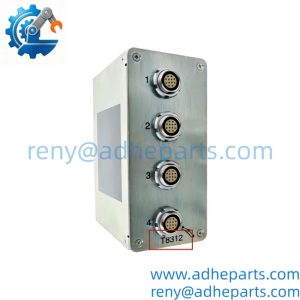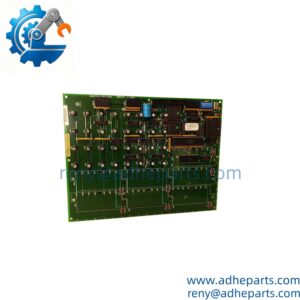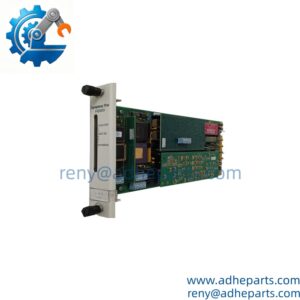
Description
Note: Many products are not yet listed. Please contact us for more product information. Our supply channels are constantly expanding, and we currently have 20 stable shared supply channels. Please confirm the model, product, price, and all other necessary information with customer service before placing an order. We offer new, refurbished, and used products, and prices are adjusted according to the year of the item you require.
3. Key Technical Specifications
Confirm each line against the OEM datasheet and the marking on your existing board before ordering. The functional revision code on this board governs firmware compatibility.
| Parameter | Value |
|---|---|
| Model | IS200ISBBG2AAB |
| Brand | GE |
| Product Family | Speedtronic Mark VI (Innovation Series 200) |
| Board Type | ISBus board — I/O bus communication interface |
| Host Equipment | Mark VI turbine control cabinet — verify the rack position |
| Backplane Interface | Mark VI proprietary backplane — verify pinout and slot assignment |
| ISBus Communication | I/O bus to the I/O packs — verify protocol, node address, and cable type |
| Data Rate | Verify with OEM datasheet |
| Connector Count | Verify — connector population varies by build |
| On-Board Fuses | Present — verify fuse ratings on your existing board before replacement |
| Status Indicators | Verify — LED arrangement varies by revision |
| Power Supply | From Mark VI backplane — verify voltage rail and current draw |
| Power Consumption | Verify with OEM datasheet |
| Isolation | Verify — field side to logic side |
| Jumper / Switch Settings | Verify — record from your existing board before ordering |
| Operating Temperature | 0 °C to +60 °C (typical for this class — verify) |
| Storage Temperature | –40 °C to +85 °C (typical — verify) |
| Humidity | 5% – 95% RH, non-condensing |
| Mounting | Mark VI rack slot, plug-in board |
| Weight | Verify with OEM datasheet |
| Certifications | Verify on the specific unit’s label |
4. Product Introduction
The GE IS200ISBBG2AAB is an ISBus board for the Speedtronic Mark VI turbine control platform. It sits in the Mark VI rack and carries the I/O bus communication between the controller and the I/O packs — the path that moves field data from the terminal boards into the control processor. On a gas or steam turbine, that is the link that keeps the controller’s picture of the machine current.
The engineering value is the ISBus architecture. Mark VI split the controller from the I/O by putting a dedicated bus between them, which lets the I/O packs sit closer to the field wiring and keeps the controller rack compact. The ISBB board is the controller-side end of that link. In my experience, the most common failure mode on this board family is not a dead board — it is a connector or cable problem on the ISBus side that the board correctly reports as a communication fault. Check the cable and the connector seating before you assume the board is bad.
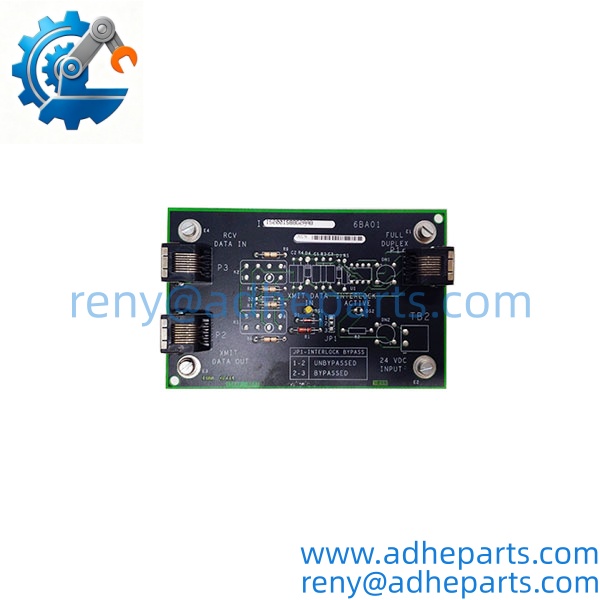
IS200ISBBG2AAB
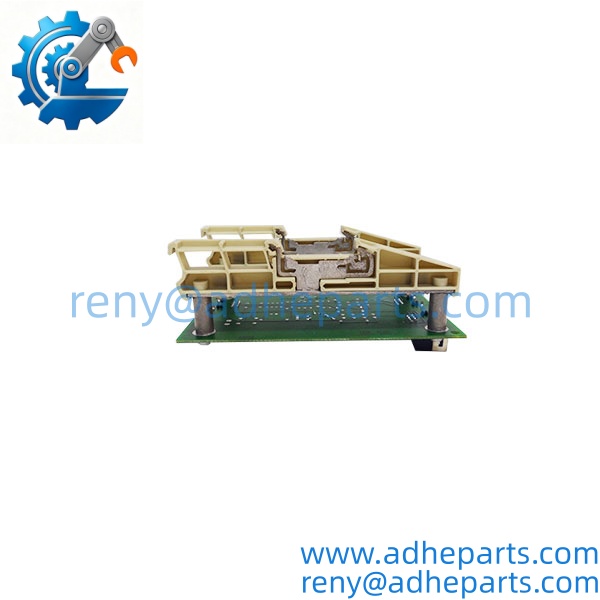
IS200ISBBG2AAB
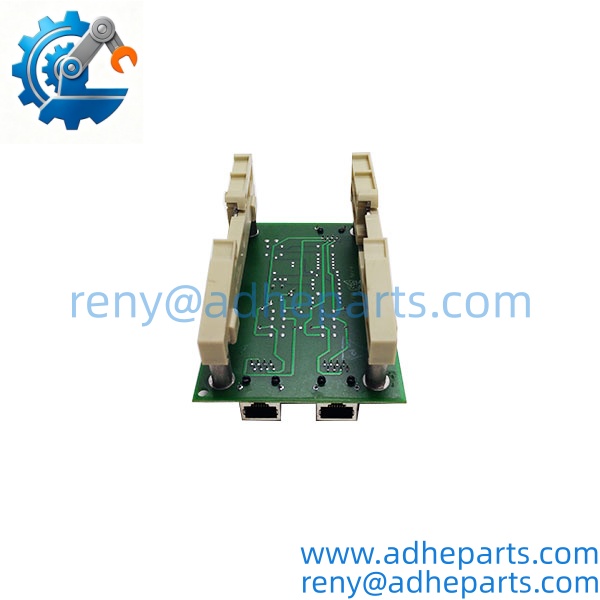
IS200ISBBG2AAB
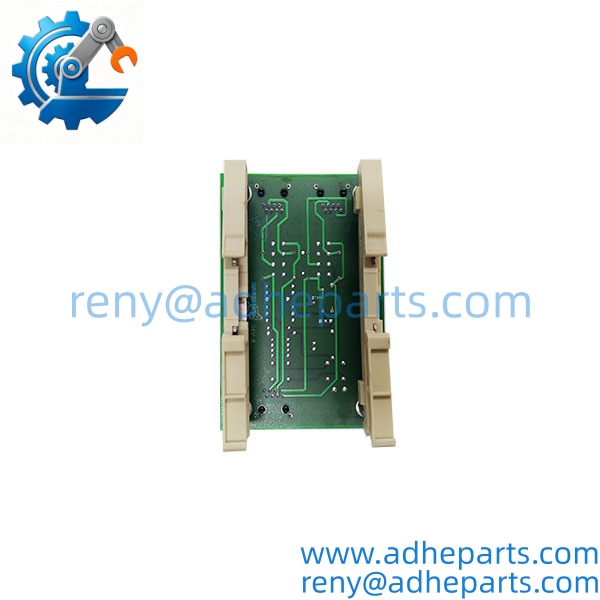
IS200ISBBG2AAB
5. Application Scenarios & Field Experience
Part 1 – Narrative Paragraph
The failure that costs the most downtime on a Mark VI turbine is a communication dropout between the controller and the I/O. The unit is running, the operator sees an I/O fault, and the board is the suspect. I have seen a crew replace an ISBB board twice and still have the fault because the real problem was a marginal ISBus cable connector. On this platform, the board is rarely the only thing that can fail. Before you order a replacement, check the ISBus cable, the connector seating, and the on-board fuses. Then check the functional revision code against your system’s firmware. A board with the right part number and the wrong revision will initialize and still drop communication under load.
Part 2 – Numbered List (Application Scenarios)
- Gas Turbine Control – I/O Bus Communication – The board carries field data from the I/O packs to the Mark VI controller. A dropout here shows up as an I/O fault and, depending on the point, a unit trip.
- Steam Turbine Control – Controller-to-I/O Link – The board is the controller-side end of the ISBus. A failed board drops the I/O packs from the controller’s view and the operator loses visibility on those points.
- Combined Cycle Plants – Mark VI Retrofit Support – Used where a Mark VI system is still in service and the OEM no longer stocks the exact revision. Replacement is often the only path short of a full control system migration.
- Industrial Turbines – Control System Maintenance – The board is a spare for plants running Mark VI controls on industrial turbines. The on-board diagnostics help isolate the fault to the board, the cable, or the I/O pack.
Part 3 – Short Field Story
A combined cycle plant had a gas turbine that logged an intermittent “I/O communication fault” during load changes. The crew replaced the ISBB board and the fault came back two days later. We asked them to check the ISBus cable and the connector seating at both ends. The cable connector at the I/O pack end had a partially backed-out pin. The plant reseated the connector and installed the correct revision board. The fault cleared. The board had been doing its job — the connector was the problem.
6. Standard Operating Procedure (SOP) for Quality Control
- Visual & Origin Inspection – We verify the GE marking, the IS200ISBBG2AAB model string, and the date code. We inspect the backplane connector for bent pins and the board for evidence of heat damage, rework, or moisture. A board with a cracked connector or burned traces is rejected.
- Revision Documentation – We read and photograph the full model string, the functional revision code, all jumper and switch settings, and the on-board fuse ratings. That record ships with the board so you can compare it against the unit you are replacing.
- Fuse Verification – We check every on-board fuse for continuity and confirm the rating matches the OEM specification. A board with a blown or wrong-rated fuse is corrected before shipping.
- Power-Up Self-Test – The board is inserted into a known-good Mark VI test rack. We verify it initializes without a backplane fault and that the controller recognizes the board type.
- ISBus Communication Test – We connect the board to a Mark VI test network and verify it communicates with the I/O packs at the specified node addresses. We run a continuous exchange loop and log any dropped frames.
- Connector Integrity Test – We mate and unmate the backplane connector ten times to confirm the contacts do not deform and the retention mechanism holds. A loose board causes intermittent faults that are hard to diagnose in the field.
- ESD-Safe Packaging – The board is wrapped in anti-static film, seated in a conductive foam insert with the connectors protected by rigid shrouds, and packed in a double-wall carton with static warning labels.
7. Frequently Asked Questions (FAQ)
Q1: Will this board work in my Mark VI rack without a firmware change?
A: Only if the functional revision code matches or is compatible with your system’s firmware. The revision code on this board governs the firmware image, and a mismatched revision can initialize and still drop communication under load. Read the code off your existing board and compare it to the replacement before you order.
Q2: What are the on-board fuses for, and should I check them?
A: The fuses protect the downstream circuits on the board and the ISBus interface. A blown fuse is a common failure mode on this board family. Before you replace a board, check the fuses and check the ISBus cable and connector for damage. A damaged cable can blow the fuse on the replacement board the moment it is installed.
Q3: What is the warranty on this board?
A: We offer a 12-month warranty from the ship date. It covers component failure, backplane connector failure, and ISBus communication failure under normal operating conditions. It does not cover damage from hot-swapping the board with the rack energized, bent pins from forced insertion, or field wiring faults that cause fuse failure. We test every board in a live Mark VI rack before it ships.
Q4: Do you have this exact board in stock?
A: Mark VI inventory moves quickly, and stock varies by revision. Confirm availability before you plan an outage. If we are out of the revision you need, we will tell you what we actually have rather than quote a date we cannot hold.
Q5: Any installation pitfalls I should watch for?
A: Four. First, power down the Mark VI rack before inserting or removing the board — these boards are not hot-swap capable. Second, record the functional revision code, all jumper and switch settings, and the fuse ratings from the old board before you remove it. Third, check the ISBus cable and connector at both ends for damage or backed-out pins before you install the replacement. Fourth, after the swap, verify the board communicates with the I/O packs and that the controller sees all points before you return the unit to service. A board that powers up is not necessarily communicating correctly.