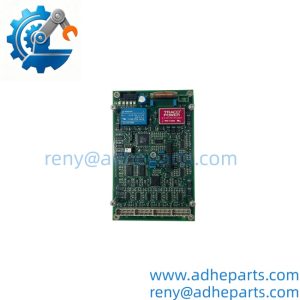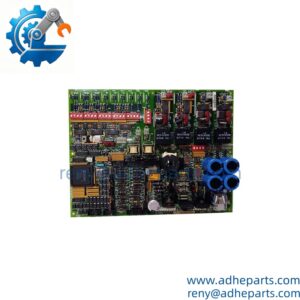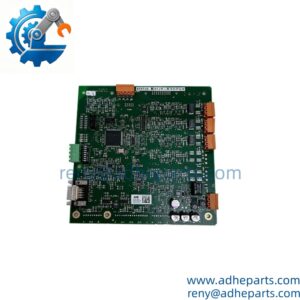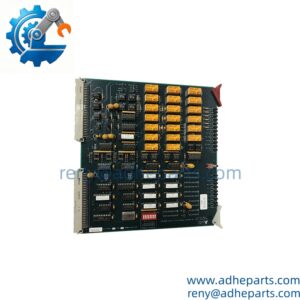
Description
Note: Many products are not yet listed. Please contact us for more product information. Our supply channels are constantly expanding, and we currently have 20 stable shared supply channels. Please confirm the model, product, price, and all other necessary information with customer service before placing an order. We offer new, refurbished, and used products, and prices are adjusted according to the year of the item you require.
Product Introduction
When a semiconductor wafer test system experiences random signal distortion that causes invalid chip performance test results and unplanned production yield loss, the root cause almost always traces back to a low-performance generic interface board that cannot maintain stable high-frequency signal transmission under continuous 24/7 fab operation.
Purpose-built for Asyst Technologies semiconductor automation and test systems, this 3200-1214-03 PCB interface board uses high-frequency PCB substrate material with excellent electrical performance, natively supporting BGA, CSP and QFP different chip package interface types. It integrates full signal processing functions including signal amplification/attenuation, analog-digital signal conversion and built-in noise filtering, eliminating the need for extra external signal conditioning modules. The 30MHz embedded industrial processor delivers deterministic signal processing performance, with maximum 50MHz output frequency to meet the high-speed data acquisition requirements of modern semiconductor test equipment. Its modular design allows quick on-site maintenance and replacement without requiring full system disassembly, drastically reducing unplanned test system downtime.
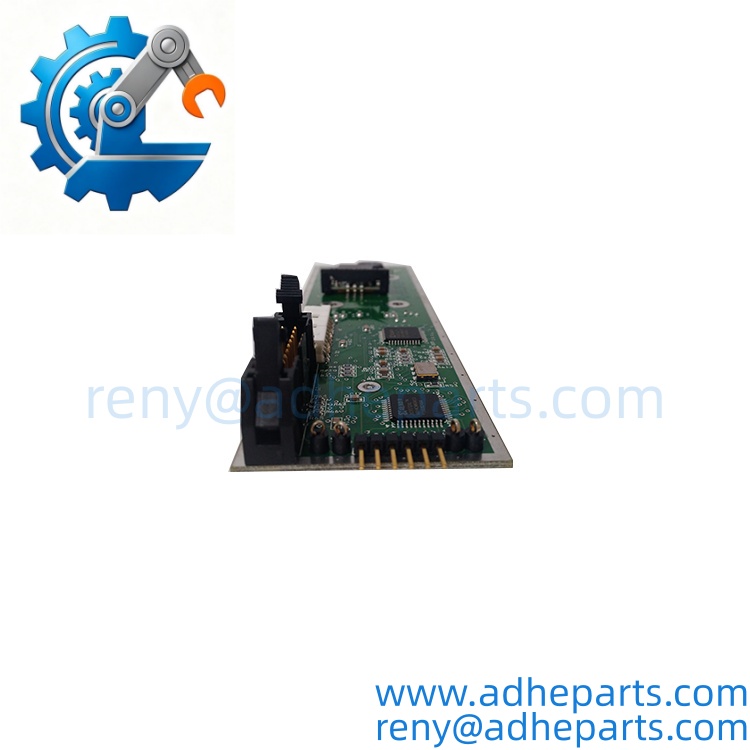
3200-1214-03
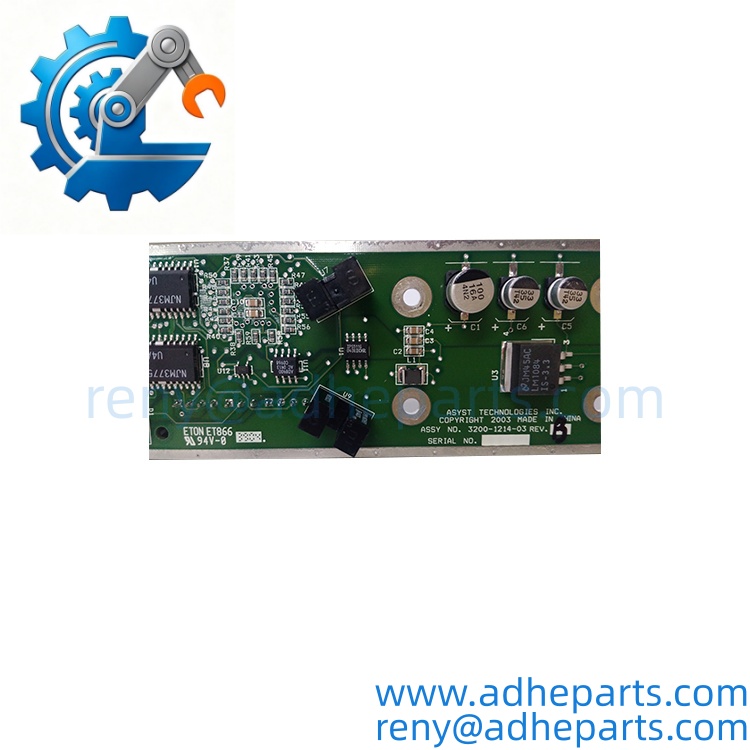
3200-1214-03
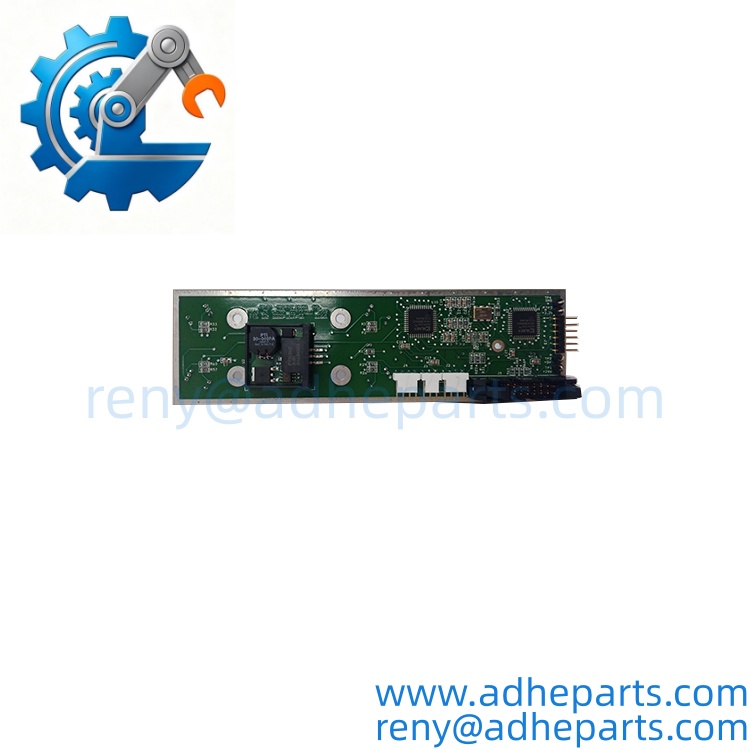
3200-1214-03
Key Technical Specifications
| Parameter | Value |
|---|---|
| Product Model | 3200-1214-03 |
| Compatible Platforms | Asyst Technologies Semiconductor Test & Industrial Automation Systems |
| Embedded Processor Speed | 30 MHz |
| Maximum Output Frequency | 50 MHz |
| Input Current Rating | 670 mA |
| Physical Dimensions | 25 cm × 32 cm |
| Net Weight | 0.014 kg |
| Supported Chip Package Interfaces | BGA, CSP, QFP |
| Signal Types Supported | Digital, Analog, Mixed Signal |
| Operating Temperature Range | 0°C to +90°C |
| Core Functions | Signal transmission, conversion, amplification/attenuation, noise filtering |
| Agency Approvals | CE industrial semiconductor equipment certified |
Field Application & Technical Pitfalls
This part runs three non-negotiable production-critical roles.
First, it acts as the core signal interface unit for semiconductor wafer probe test systems, connecting the test head to the DUT (device under test) to ensure accurate chip function and performance testing.
Second, it serves as the multi-sensor data acquisition interface for semiconductor manufacturing fab process control systems, collecting real-time temperature, pressure and position sensor data for the central fab automation controller.
Third, it functions as the direct retrofit replacement for older Asyst interface boards, restoring full test system operation without requiring any major test program rewrite or hardware migration.
⚠️ High-Frequency Signal Wiring Mismatch Risk: The board is designed for high-frequency signal transmission. If you use unshielded generic ribbon cables for signal wiring, you will introduce severe EMI that degrades signal integrity far below the rated 50MHz performance.
⚠️ Input Current Overload Risk: The module only supports 670mA maximum input current. If you connect a high-power field device that draws more than 670mA directly to the board, you will permanently damage the onboard signal processing circuit.
⚠️ Operating Temperature Overrun Risk: The maximum rated operating temperature is 90°C. If you install the board in a poorly ventilated test equipment enclosure without proper cooling, you will cause the PCB substrate to overheat and lose its high-frequency electrical performance.
I watched a senior semiconductor test tech skip the signal cable selection check last summer. He installed this 3200-1214-03 board in a wafer test system, used unshielded generic ribbon cables for signal wiring, and the test system started producing random invalid test results after 1 hour of operation. The team spent 1.5 hours troubleshooting before they found the EMI interference issue. That 1-minute oversight forced the test cell to run at 50% reduced throughput for half a shift.
Quality Control (QC) SOP & Transparency
- Inbound Verification: Cross-check the OEM serial number against Asyst Technologies’ official part revision database, run anti-counterfeit validation on the board’s laser-etched serial label, and confirm no cracked signal traces or bent connector pins.
- Live Rig Testing: Mount the board in a certified semiconductor test system test rack, connect a full set of simulated BGA/CSP/QFP test loads, and verify 4 hours of stable continuous 50MHz high-frequency signal transmission operation.
- Parameter Testing: Confirm 30MHz processor stable operation, verify 50MHz output frequency zero signal distortion, and validate all signal transmission, conversion and filtering functions meet factory specifications.
- Final QA & Packaging: Seal the fully tested board in a static-shielding anti-static bag, apply a unique QC passed serial label, and pack it in ESD-dissipative foam with a printed hard copy of the full high-frequency signal performance test report.
Frequently Asked Questions
- Can I hot-swap this board while the test system is powered on? No. Standard Asyst semiconductor test interface boards do not support certified hot-plug. Pulling the board live will instantly cut all signal paths between the test equipment and DUT, triggering unplanned test abortion.
- What exact Asyst systems does this part work with? It is fully compatible with Asyst Technologies semiconductor test and fab automation platforms. It will not establish native stable communication with non-Asyst generic industrial test systems without custom driver configuration.
- How long is the standard warranty for this new surplus unit? It carries a full 12-month functional warranty. If it fails within that window under specified operating conditions, we cover all return shipping and bench replacement costs.
- How do I tell a genuine OEM unit apart from a refurbished clone? Genuine units have the Asyst Technologies hologram sticker on the PCB, and the main 30MHz processor chip carries the official Asyst part number marking. Refurbished clones usually skip the official hologram and use generic lower-speed processors that cannot deliver the rated 50MHz high-frequency signal performance.
- Will this 3200-1214-03 directly replace an older Asyst interface board? No. Older Asyst interface board variants may have different firmware versions. You will need to re-verify all signal channel mapping and high-frequency calibration settings in the test system engineering software after swapping.
- What’s the maximum safe continuous operating temperature at full 50MHz load? It will hold stable signal performance up to 90°C, though your mileage may vary if the test equipment enclosure cooling airflow drops below 10 CFM and internal PCB temperatures spike 15°C above ambient.