Description
Note: Many products are not yet listed. Please contact us for more product information. Our supply channels are constantly expanding, and we currently have 20 stable shared supply channels. Please confirm the model, product, price, and all other necessary information with customer service before placing an order. We offer new, refurbished, and used products, and prices are adjusted according to the year of the item you require.
3. Key Technical Specifications
Do not order against this table alone. I cannot confirm the module type, the safety category, and the electrical ratings from the model number. Match every line against the OEM datasheet and the label on your existing module.
| Parameter | Value |
|---|---|
| Model | SS832 |
| Brand | ABB |
| Product Family | Verify — likely ABB safety or switchgear accessory |
| Module Type | Verify — safety relay, interface module, or other accessory |
| Safety Category | Verify — confirm the SIL/PL or category rating on your unit label |
| Input Voltage | Verify with OEM datasheet — confirm on the unit label |
| Output Rating | Verify — relay contact rating or semiconductor output rating |
| Number of Channels | Verify with OEM datasheet |
| Response Time | Verify — confirm the safety response time for your application |
| Isolation | Verify — field side to logic side |
| Power Supply | Verify — voltage rail and current draw |
| Connector Type | Verify — terminal block or connector arrangement |
| Status Indicators | Verify — LED arrangement varies by revision |
| Operating Temperature | Verify for your panel ambient |
| Storage Temperature | –40 °C to +85 °C (typical — verify) |
| Humidity | 5% – 95% RH, non-condensing |
| Mounting | Verify — DIN rail, panel, or switchgear |
| Weight | Verify with OEM datasheet |
| Certifications | TÜV, CE, UL — verify on the specific unit’s label |
4. Product Introduction
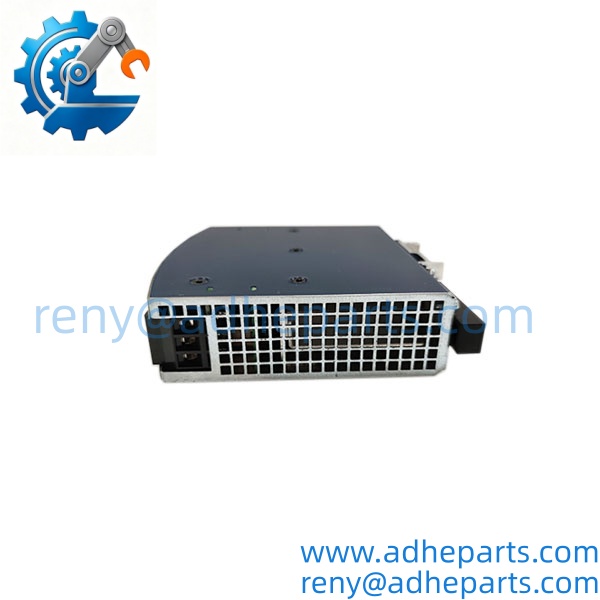
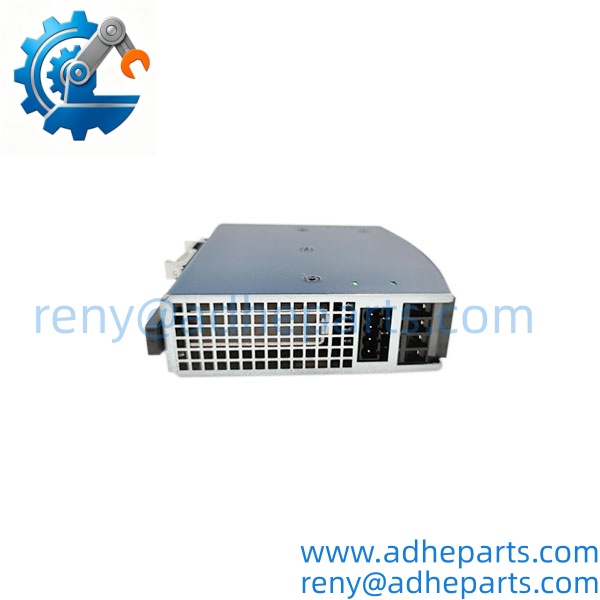
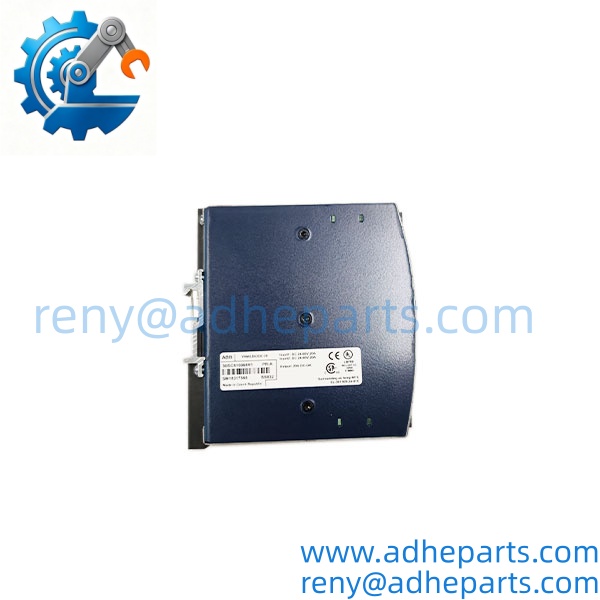
The ABB SS832 is an ABB module whose exact function I cannot confirm from the model number alone. The SS prefix appears in ABB safety and switchgear accessory numbering, and the number is associated in some references with safety relays or interface modules. I cannot tell you whether this is a safety relay, an interface module, or another accessory. I am not going to guess.
Here is what I can tell you as a straight answer: on ABB safety hardware, compatibility is system-specific and safety-category-specific. A module that fits one panel may not meet the safety category or the voltage rating of another. Before you order, read the label on the existing module and cross-reference it against the OEM datasheet for your application. If you send me a photo of the module and the panel it came out of, I will confirm what you are looking at.
SS832
SS832
SS832
SS832
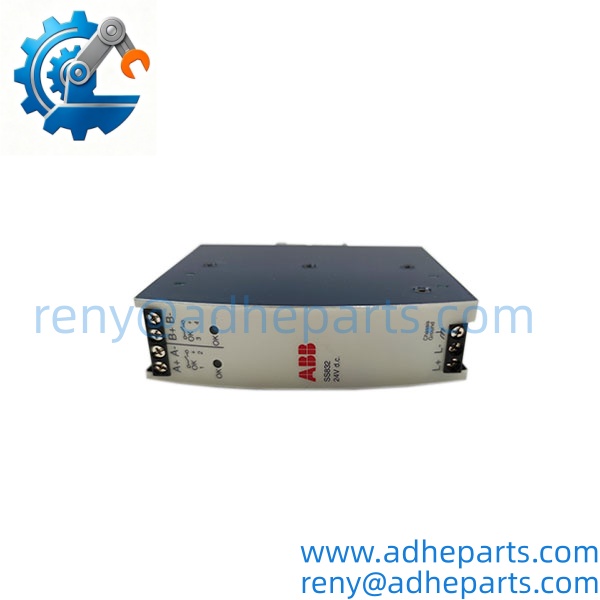
SS832
5. Application Scenarios & Field Experience
Part 1 – Narrative Paragraph
The failure that costs the most on a safety module is not a dead relay — it is a relay that fails to drop out when the safety circuit opens. The machine runs, the E-stop is pressed, and the output does not release. I have seen that on a safety relay that had welded contacts because the load was an inductive contactor coil above the relay’s break rating. The relay was correctly installed and correctly wired; it was underrated for the load. On a safety circuit, the contact rating and the load type matter more than any single specification on the datasheet. Check the load before you assume the module is at fault.
Part 2 – Numbered List (Application Scenarios)
- Machine Safety – E-Stop and Guard Door Monitoring – The module monitors E-stop pushbuttons and guard door switches and removes power from the hazardous motion when the circuit opens.
- Press and Stamping – Safety Valve Control – Used to control the safety valves on a press or stamping machine. The response time and the contact rating determine whether the valve de-energizes in time.
- Packaging – Safety Circuit Interface – The module interfaces the safety circuit to the machine control system. The output contacts drive the safety contactors or the drive STO inputs.
- Material Handling – Conveyor Safety Zones – Used to monitor the safety switches on a conveyor zone and stop the drive when a guard is opened.
Part 3 – Short Field Story
A stamping plant had a safety relay that would not release when the light curtain was interrupted. The maintenance team replaced the light curtain and the fault persisted. We asked them to check the relay contact and the load. The relay contact had welded closed because the safety valve coil had an inrush current above the relay’s break rating. The plant replaced the relay with a unit rated for the load and added a suppression diode across the coil. The safety function worked on the next test. The original relay had been doing its job — it was underrated for the inductive load.
6. Standard Operating Procedure (SOP) for Quality Control
- Visual & Origin Inspection – We verify the ABB marking, the SS832 model string, and the date code. We inspect the terminals and the housing for cracks, corrosion, or moisture ingress. A module with a damaged terminal or evidence of rework is rejected.
- Part Number and Revision Documentation – We read and photograph the full model string, the revision suffix, and any safety category marking. That record ships with the module so you can compare it against the unit you are replacing.
- Compatibility Cross-Check – We verify the module against the OEM documentation for the application you specify. A module that does not match the requested safety category or voltage rating is set aside rather than shipped.
- Functional Test – We power the module on a bench fixture at the specified voltage and verify it operates correctly. For safety relays, we verify the output drops out when the input circuit opens.
- Contact Rating Verification – We verify the output contact rating against the OEM datasheet. A module with a damaged or welded contact is rejected.
- Isolation Test – We apply the rated isolation voltage between circuits and between a circuit and ground. Leakage current must stay below the datasheet limit.
- ESD-Safe Packaging – The module is wrapped in anti-static film, seated in a conductive foam insert with the terminals protected, and packed in a double-wall carton with static warning labels.
7. Frequently Asked Questions (FAQ)
Q1: What is the function of the ABB SS832?
A: I cannot confirm the exact function from the model number alone. The SS prefix appears in ABB safety and switchgear accessory numbering, and the number is associated in some references with safety relays or interface modules. Send us a photo of the label and the panel it came out of, and we will confirm it against the OEM documentation before you order.
Q2: Is this module compatible with all ABB safety systems?
A: No. ABB safety hardware is system-specific and safety-category-specific. A module that fits one panel may not meet the safety category or the voltage rating of another. Confirm compatibility against your panel’s documentation and the label on your existing module before ordering.
Q3: What is the warranty on this module?
A: We offer a 12-month warranty from the ship date. It covers component failure, contact failure, and insulation breakdown under normal operating conditions. It does not cover damage from incorrect installation, mechanical impact, or operation beyond the rated range. For safety components, the warranty is void if the module shows evidence of overvoltage or a welded contact caused by an underrated load. Every module ships with a test report where applicable.
Q4: Do you actually have this in stock?
A: This is legacy or specialty inventory, and I will not pretend otherwise. Stock on ABB safety components varies by revision, and the exact variant you need may not be on the shelf. Confirm availability before you plan an outage. If we are out, we will tell you what we actually have rather than quote a date we cannot hold.
Q5: Any installation pitfalls I should watch for?
A: Four. First, verify the safety category and the voltage rating on the replacement match the module you are removing. Second, check the load type and the contact rating; an inductive load above the relay’s break rating will weld the contacts. Third, record the wiring and the safety configuration from the old module before you remove it. Fourth, after the swap, test the safety function — press the E-stop or open the guard — and verify the output drops out before you return the machine to service. A module that powers up is not necessarily executing the safety function correctly.