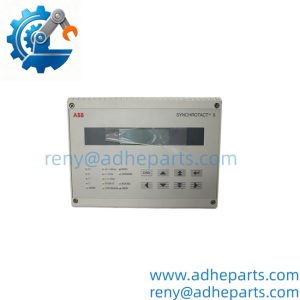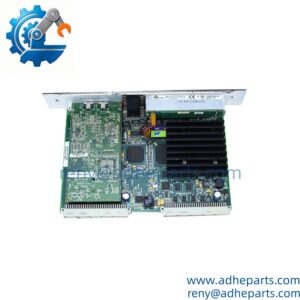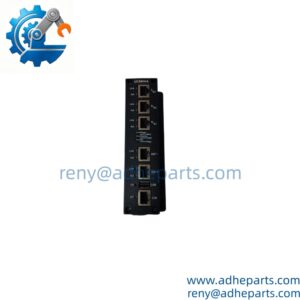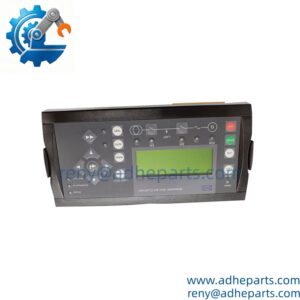
Description
Note: Many products are not yet listed. Please contact us for more product information. Our supply channels are constantly expanding, and we currently have 20 stable shared supply channels. Please confirm the model, product, price, and all other necessary information with customer service before placing an order. We offer new, refurbished, and used products, and prices are adjusted according to the year of the item you require.
Key Technical Specifications
| Parameter | Specification |
|---|---|
| Manufacturer | Rockwell Automation |
| Brand | Allen-Bradley |
| Catalog Number | 1769-L32C |
| Controller Family | CompactLogix |
| Controller Type | CompactLogix L32C |
| Series | Series A |
| Network Interface | ControlNet |
| User Memory | 750 KB |
| Programming Software | RSLogix 5000 / Studio 5000 Logix Designer, depending on firmware |
| Controller Power Draw | 680 mA @ 5V DC |
| 24V DC Current Draw | 40 mA |
| Power Dissipation | 4.21 W |
| I/O Architecture | 1769 Compact I/O |
| Controller Status | Discontinued |
| Replacement Consideration | Verify ControlNet architecture and project compatibility |
| Mounting / System Type | CompactLogix 1769 system |
Rockwell Automation’s documentation identifies the 1769-L32C as a CompactLogix L32C controller and specifies a controller current draw of 680 mA at 5V DC, 40 mA at 24V DC, and 4.21 W power dissipation. Rockwell’s product compatibility records identify the 1769-L32C as a Series A discontinued controller.
The “C” designation is important: the L32C is the ControlNet version of this generation of CompactLogix controllers. It should not be confused with the 1769-L32E, which uses EtherNet/IP. Rockwell’s documentation lists both models separately.
Product Introduction (Anti-Template)
Operating as the processing core of a CompactLogix 1769 control system, the Allen-Bradley 1769- combines PLC logic processing with an integrated ControlNet interface. The controller is designed to work with the 1769 Compact I/O architecture and uses 750 KB of controller memory. Its network architecture is particularly important for legacy installations where ControlNet remains part of the machine or plant control system.
The 1769- is a legacy Series A controller and Rockwell’s current compatibility records list it as discontinued. That does not make it unusable in an existing installation, but replacement procurement requires more attention to firmware, project version, ControlNet configuration, and installed 1769 I/O. Honestly, checking the existing controller revision and network architecture before ordering can save considerably more time than trying to migrate a legacy system after a failed replacement.
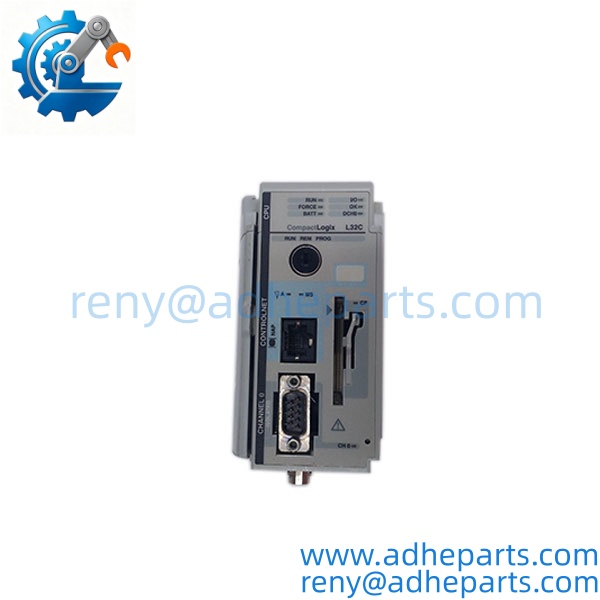
1769-L32C
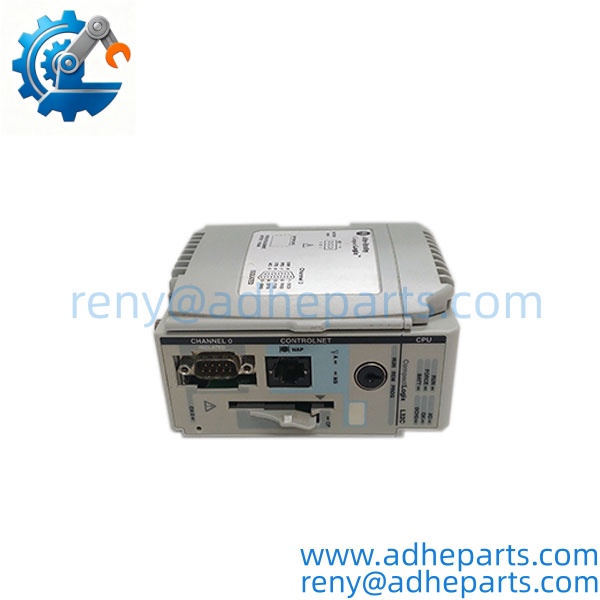
1769-L32C
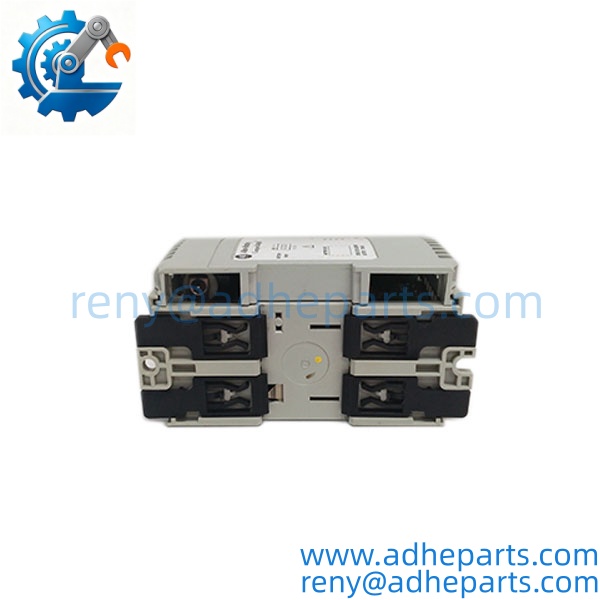
1769-L32C
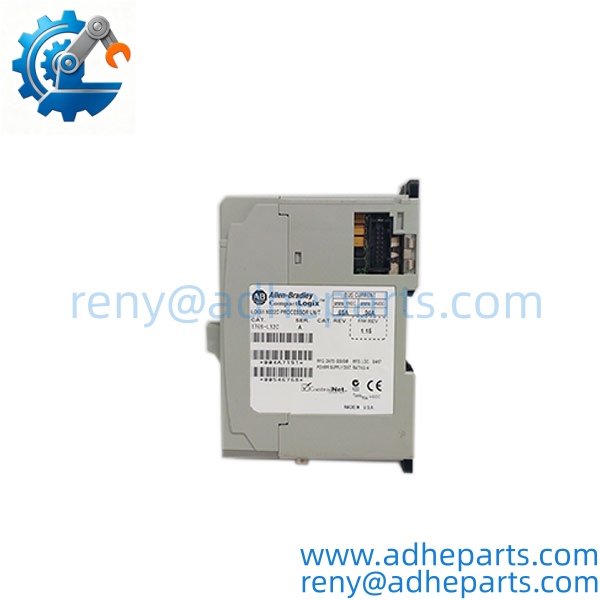
1769-L32C
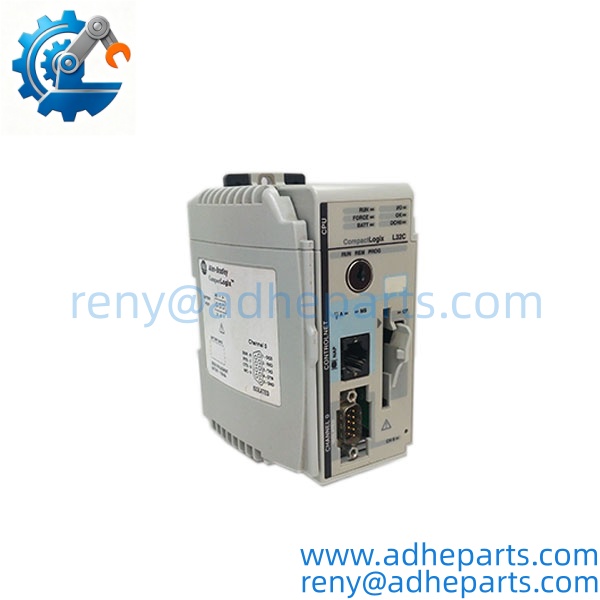
1769-L32C
QC, Procurement & Logistics SOP
- Inbound Verification
Verify the complete catalog number , Series marking, firmware/revision information, serial number, front-panel indicators, ControlNet interface, and 1769 bus connector. Confirm that the unit is not a 1769-L32E EtherNet/IP variant. - Live Rig Testing
Where a compatible CompactLogix test setup is available, perform controlled power-up and diagnostic checks. Verify controller status, processor operation, programming connection, ControlNet communication, and communication with representative 1769 I/O modules. - QA & Anti-Static Packaging
Inspect the housing, ControlNet connector, backplane contacts, status indicators, retaining mechanism, and exposed terminals. Check for corrosion, impact damage, contamination, or previous repair work. Use ESD-safe packaging and protect the communication connector during transportation. - Global Logistics & Export Compliance
Because this is a discontinued controller, accurately declare the part number and condition on the commercial documentation. Use anti-static and impact-resistant packaging for international freight, and provide applicable invoice, packing list, and origin documentation.
Technical Pitfalls & Integration Warnings
- Firmware Rev Mismatch
A replacement controller with a different firmware revision may not accept the existing application without a compatibility check. For example, a hypothetical project validated around firmware V13 may require different handling when transferred to a controller with another supported revision. Verify controller firmware, RSLogix/Studio 5000 version, and project file before downloading. - DIP Switch / Configuration Errors
Do not treat the 1769- like a simple I/O module with a bank of user-configurable DIP switches. ControlNet node configuration and controller/project settings must match the existing system. Network parameters should be documented before replacing the CPU. - Wiring / Terminal Incompatibility
The 1769- itself is a controller rather than a field I/O terminal block. Field wiring terminates on separate 1769 I/O modules. Confirm the installed I/O module sequence, bus configuration, power budget, and ControlNet connections before replacement. - ESD Destruction During Unboxing
The controller’s backplane and electronic circuitry can be damaged by electrostatic discharge. Keep the processor in its ESD-safe packaging until installation and use appropriate grounding procedures when handling the unit.
Frequently Asked Questions (FAQ)
1. What is the Allen-Bradley 1769-?
The 1769- is an Allen-Bradley CompactLogix PLC controller with integrated ControlNet communication. It belongs to the older 1769 CompactLogix controller generation.
2. Is the 1769- an EtherNet/IP controller?
No. The is the ControlNet version. The similar 1769-L32E is the EtherNet/IP version. These communication architectures should not be treated as interchangeable simply because the controller housings are similar.
3. How much memory does the 1769- have?
The controller provides 750 KB of memory for the CompactLogix application.
4. Is the 1769- discontinued?
Yes. Rockwell Automation’s compatibility records identify the 1769- Series A as discontinued, with an end date of December 31, 2015.
5. What power supply does the 1769- use?
The controller belongs to the 1769 CompactLogix family and is designed for use with the corresponding 1769-series power-supply architecture. The complete I/O configuration should be checked against the power budget before selecting the supply. Rockwell’s published controller data lists 680 mA at 5V DC and 40 mA at 24V DC for the itself.
6. Can the 1769- be replaced by a 1769-L32E?
Not as a simple communication-equivalent replacement. The uses ControlNet, while the L32E uses EtherNet/IP. A replacement may therefore require changes to the network architecture, communication modules, project configuration, and associated cabling.
7. What should I provide when ordering a replacement?
Provide the complete 1769- catalog number, Series/revision information, firmware revision if available, a photo of the controller label, the existing ControlNet configuration, installed 1769 I/O modules, and the RSLogix 5000/Studio 5000 project version. For a legacy system, these details are important for confirming compatibility before shipment.