Description
Note: Many products are not yet listed. Please contact us for more product information. Our supply channels are constantly expanding, and we currently have 20 stable shared supply channels. Please confirm the model, product, price, and all other necessary information with customer service before placing an order. We offer new, refurbished, and used products, and prices are adjusted according to the year of the item you require.
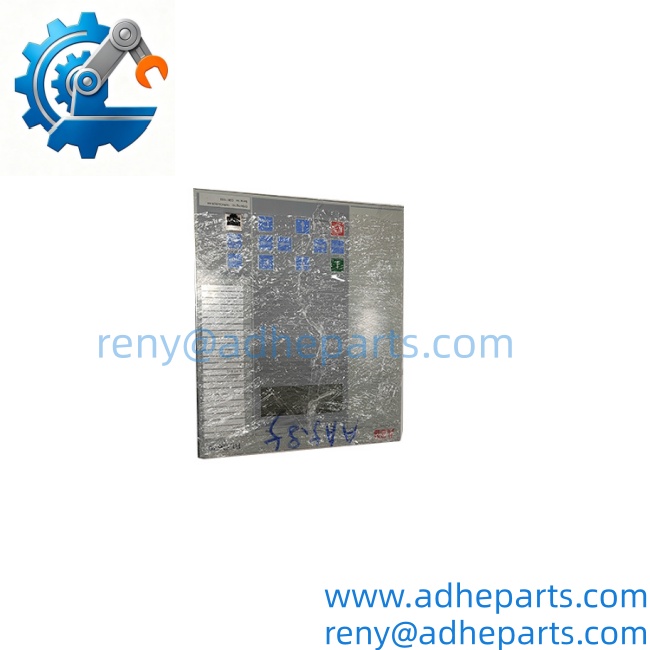
REG670
3. Key Technical Specifications
The order code suffix defines the hardware and firmware build. Verify each line below against the label on your existing unit and the ABB order code documentation for your specific variant.
| Parameter | Value |
|---|---|
| Model | REG670 |
| Brand | ABB |
| Product Family | Relion 670 series |
| Function | Generator protection, generator-transformer unit protection, excitation and rotor ground fault protection |
| Differential Protection | Generator differential, generator-transformer differential — verify build |
| Stator Ground Fault | 100% stator ground fault via third-harmonic or injection method — verify |
| Rotor Ground Fault | 100% rotor ground fault via injection — verify |
| CT Inputs | 1A or 5A rated — verify build |
| VT Inputs | 110–220V rated — verify build |
| Binary Inputs | Up to 24 (build dependent) — verify |
| Binary Outputs | Up to 20 (build dependent) — verify |
| Communication Protocols | IEC 61850 Ed.1/Ed.2, GOOSE, DNP3, IEC 60870-5-103, Modbus, LON, SPA |
| Ethernet Ports | Multiple rear ports (galvanic and fiber options) + front programming port |
| Time Sync | IRIG-B, SNTP, IEEE 1588 PTP |
| HMI | Graphical LCD, local control panel with keypad |
| Programming Interface | PCM600 with 670 series connectivity package |
| Power Supply | 110–250V DC / 100–240V AC — verify build |
| Power Consumption | Verify with OEM datasheet |
| Mounting | 4U 19″ rack or flush panel mount |
| Operating Temperature | –25 °C to +55 °C (verify for your variant) |
| Storage Temperature | –40 °C to +85 °C |
| Humidity | 5% – 95% RH, non-condensing |
| Weight | Approx. 9 – 12 kg depending on configuration |
| Certifications | IEC 61850, IEC 60255, CE, UL (verify on label) |
4. Product Introduction
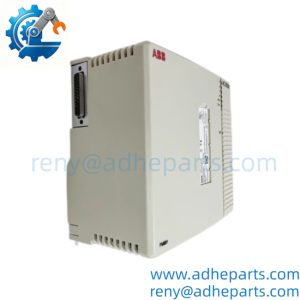
The ABB REG670 is the generator protection IED in the Relion 670 series. It protects generators and generator-transformer units against stator faults, rotor ground faults, loss of excitation, pole slipping, and abnormal frequency and voltage conditions. It is the protection package that sits between the machine and the step-up transformer, and it is the IED that decides whether a multi-million-dollar generator survives a fault.
What separates the REG670 from a general-purpose protection relay is the 100% stator and rotor ground fault protection. Older generator protection schemes cover only part of the stator winding for ground faults — typically 90% to 95%. The REG670 uses injection-based methods to cover the full winding, including the neutral end where a fault can go undetected until a second fault develops. That second fault is the one that destroys the machine. For a large generator, that difference is the whole reason to specify this IED.
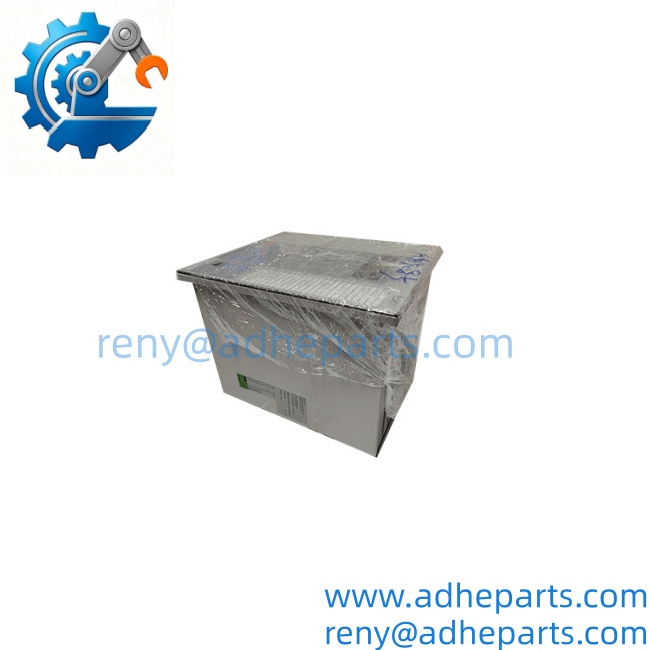
REG670
5. Application Scenarios & Field Experience
Part 1 – Narrative Paragraph
The failure that destroys a generator is almost never the first ground fault. It is the second one. A single ground fault near the neutral end of the stator winding may not trip the unit because the fault current is too small to detect with conventional protection. The machine stays online, the fault goes unnoticed, and then a second ground fault occurs at a different point in the winding. Now you have a phase-to-phase fault through the stator core, and the damage runs into millions. The REG670’s 100% stator ground fault protection exists to catch that first fault so it never gets the chance to become a catastrophe. In my experience, the plants that specify this level of protection are the ones that have already learned the lesson the hard way.
Part 2 – Numbered List (Application Scenarios)
- Power Generation – Large Turbo-Generator Protection – The REG670 provides differential, 100% stator ground fault, and 100% rotor ground fault protection for steam and gas turbine generators. It integrates with the plant DCS over IEC 61850 for alarm and event reporting.
- Hydro Power – Hydro-Generator Protection – Used on hydro units where the generator and step-up transformer are protected as a unit. The injection-based stator ground fault protection covers the full winding, which is critical on units with high capacitance to ground.
- Industrial Cogeneration – Generator Protection on a Plant Bus – Protects generators running in parallel with the utility. The loss-of-excitation and pole-slipping protection prevents the generator from being damaged when the utility tie trips.
- Nuclear – Emergency Diesel Generator Protection – Used on safety-related diesel generators where protection reliability is paramount. The redundant architecture and self-supervision meet the station’s safety requirements.
Part 3 – Short Field Story
A hydro plant had a 40 MVA unit that would trip on “stator ground fault” roughly once a month, always on startup. The crew had tested the generator insulation, the bus duct, and the neutral grounding transformer. Everything checked out, and the trips kept happening. The plant was about to pull the unit for a full inspection when they asked us to review the protection settings. The was correctly detecting a real condition — the injection signal was finding a high-resistance ground path in the stator that a megger test could not see at low voltage. The winding had a developing insulation defect that was caught before it became a fault. The unit was rewound on a planned outage instead of a forced one.
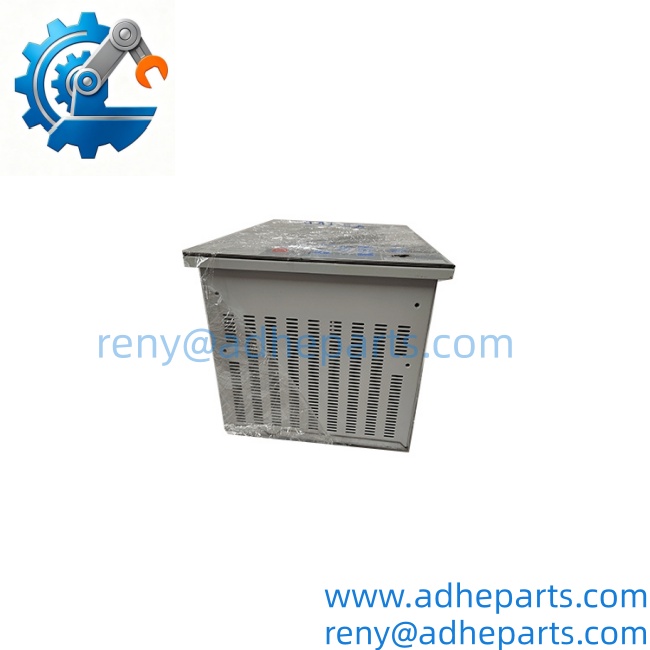
REG670
6. Standard Operating Procedure (SOP) for Quality Control
- Visual & Origin Inspection – We verify the ABB marking, the model string, the order code, and the date code. We inspect the rear connectors, fiber ports, and the front HMI panel for cracks or dead pixels. Any unit with a damaged HMI or bent connector pins is rejected.
- Configuration Extraction – On refurbished units with an existing configuration, we extract and archive it. On new surplus units, we record the factory default firmware revision. We do not ship a used IED without documenting its configuration state.
- Power-Up & Self-Test – The IED is powered from a bench supply at rated voltage. We verify the self-test completes without a “Fail” indication and that the HMI boots to the default display. We record the firmware revision string.
- Binary I/O Verification – We inject rated voltage into each binary input and confirm the IED reports the correct state. We command each binary output and verify contact closure with a continuity meter.
- Analog Input Verification – We inject calibrated currents and voltages into the CT and VT inputs and verify the IED’s measured values against the reference. Accuracy must stay within ±0.5% for current and ±0.5% for voltage.
- Injection Circuit Test – We verify the stator and rotor ground fault injection circuits function correctly on the test bench. This is the protection element that matters most on this IED, and it does not get shipped untested.
- Communication Port Test – We connect to the front port with PCM600 and verify the IED is recognized. We test each rear Ethernet port with a loopback and confirm link status and packet throughput.
- ESD-Safe Packaging – The IED is wrapped in anti-static film, placed in a fitted foam insert with the rear connectors protected, and packed in a reinforced carton with “Precision Electronic Equipment” labels.
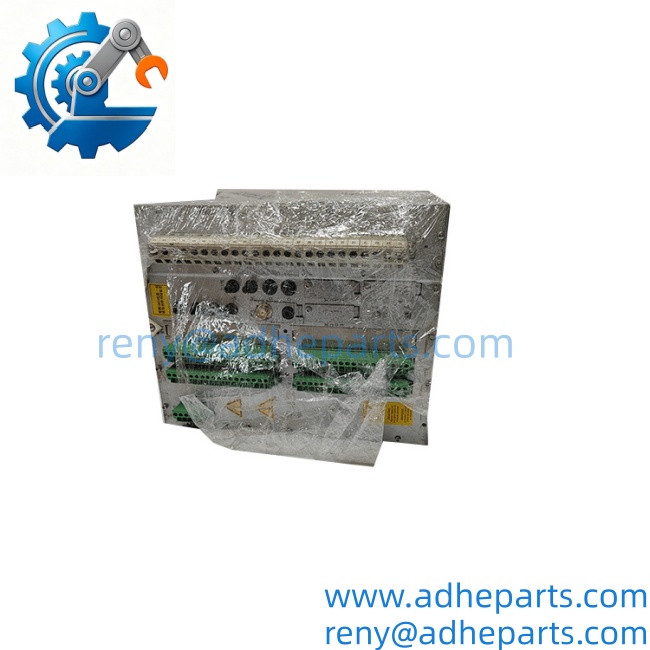
REG670
7. Frequently Asked Questions (FAQ)
Q1: What is the difference between the and the REC670?
A: They are both Relion 670 series IEDs, but they serve different purposes. The REC670 is a bay control IED — it manages breaker and disconnector control, interlocking, and synchrocheck for one bay. The is a generator protection IED — it provides differential, ground fault, and abnormal operating condition protection for the generator itself. They are often used in the same station but in different roles.
Q2: Will my existing configuration load into this IED?
A: Only if the firmware revision matches or is compatible. The configuration is tied to the IED’s firmware version. If the replacement has a newer firmware revision, you may need to update your PCM600 project and re-validate the configuration. Pull your old IED’s configuration file before you remove it — that file is your recovery path.
Q3: What is the warranty on this IED?
A: We offer a 12-month warranty from the ship date. It covers hardware failure — HMI failure, communication port failure, binary I/O failure, analog input failure, and power supply failure under normal operating conditions. It does not cover damage from incorrect power supply voltage, ESD damage from handling without a wrist strap, or physical damage to the connectors or HMI. We test every unit on a bench before it ships.
Q4: Do you have this exact order code in stock?
A: Relion 670 inventory moves and varies by order code and build suffix. Confirm availability before you plan an outage. If we do not have the exact variant you need, we will tell you what we do have and whether a different build would suit your application. Do not assume any will drop in — the order code suffix matters.
Q5: Any installation pitfalls I should watch for?
A: Four. First, back up the configuration and event log from the old IED before you remove it. Second, verify the power supply voltage on the label matches your station battery — connecting 250V DC to a 110V DC unit will destroy the power board. Third, the injection circuits for stator and rotor ground fault protection require specific wiring to the generator neutral and the rotor circuit — verify the wiring against the OEM installation guide before you power up. Fourth, after the swap, verify the IEC 61850 communication with the station HMI and test the protection trip outputs before you return the generator to service. A generator protection IED that boots but does not trip is worse than no protection at all.